This is part of a series highlighting the career and technical education programs offered at Sanford Regional Technical Center.
When someone calls 911, Emergency Medical Technicians are often the first medical professionals to arrive on scene. In Sanford Regional Technical Center's EMT Program, students learn the knowledge and skills needed to provide emergency medical care—from initial patient assessment through treatment and transport.
The program is led by instructor Sharon Jackson, who has been in the EMS field since age 15 and a licensed provider for 25 years. A proboard certified Firefighter I & II and paramedic, Jackson still works as a firefighter/paramedic when not teaching, bringing current real-world experience into the classroom. The program currently holds the record for the highest number of students who have gone on to become licensed EMTs in its history.
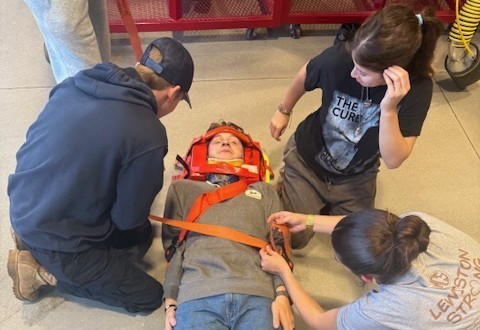
Students study anatomy, physiology, and pathophysiology while learning EMT assessment and treatment protocols for both medical and trauma patients. The hands-on curriculum includes patient assessments, vital signs monitoring, medication administration within the EMT scope of practice, and proper techniques for lifting and moving patients using various equipment types—all skills required of certified EMTs.
"The EMT program at SRTC is a perfect opportunity for those who have an interest in emergency medicine to learn the skills, confidence, and procedures to help those in need with great support from the instructor and those around you. This class teaches you everything you need to pass your NREMT and work on an ambulance helping those in need and is a fun and engaging class along the way. I don't think I would want to spend my time in the mornings anywhere else” said Rowan Berounsky-Porter (currently an EMT and Marshwood student, Firefighting I & II program completer and SRTC Student of the Year Nominee).
The program provides seven college credits through Southern Maine Community College and American Heart Association CPR certification. Students also earn several specialized safety certifications that teach them how to handle hazardous materials incidents, report suspected abuse or neglect, and provide immediate bleeding control—skills that prepare them for the full range of situations EMTs encounter.
Students describe the program's positive environment in their own words. Kelsey Chagnon, SRTC, York senior and Firefighting I & II program completer added, "It's a really positive environment and everyone is comfortable with each other."
Jackson's teaching philosophy centers on meeting students where they are. "My students have taught me that they want to learn and not everyone learns the same way," Jackson said. "This means we must adjust the way we teach to meet the way they learn instead of trying to get them to adjust the way they learn to meet the way we teach."
With a nationwide shortage of EMS providers, communities across the country need qualified EMTs to respond to emergencies. The program equips students with professional certifications, hands-on experience, and the clinical knowledge to begin their EMS careers or continue their education in paramedicine or other healthcare fields immediately after high school.